


One of the most fascinating islands in the Canary archipelago, Lanzarote is not only known for its volcanic landscapes and dreamy beaches, but also for its rich historical and cultural heritage.
From ancient buildings to contemporary works of art, the island offers a variety of places that will allow you to immerse yourself in its history and culture.
Here are the most important places to visit in Lanzarote if you are interested in exploring the island’s historical and cultural heritage.
1. César Manrique Foundation
Location: Tahíche
The César Manrique Foundation is a tribute to the famous Lanzarote artist and architect César Manrique, whose influence is fundamental in the conservation of the island’s landscape and architecture.
The foundation’s headquarters, a house built on an ancient volcano, houses a collection of Manrique’s works and other pieces of contemporary art.
Visitors can explore the gardens, innovative architecture, and exhibits showcasing the life and work of this influential artist.
2. Castle of San José
Location: Arrecife
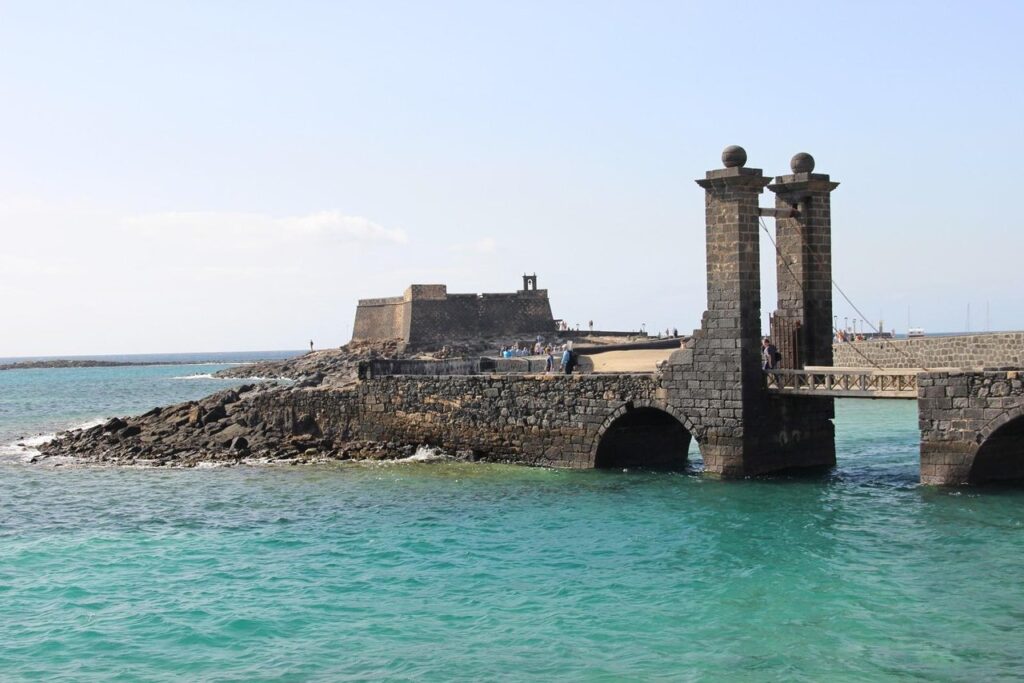
The Castillo de San José, known as the Castillo de San José, was built in the 18th century to protect the port of Arrecife from pirate attacks.
Currently, it houses the International Museum of Contemporary Art, which presents a collection of works by local and international artists.
The castle, restored and remodeled, offers panoramic views of the harbour and is a prominent example of the military architecture of the time.
3. Teguise
Location: Teguise
Teguise, the former capital of Lanzarote, is a charming village with cobbled streets and colonial architecture.
Here, you can visit the City Museum and the Castle of Santa Barbara, a 16th-century fortress that offers breathtaking views and houses a museum about the history of pirates.
The Sunday market in Teguise is an excellent opportunity to explore the local culture and buy artisanal products.
4. La Geria
Location: La Geria
La Geria is a unique wine region in Lanzarote, famous for its traditional vine cultivation techniques in volcanic soils.
Here you can visit local wineries and learn about the winemaking process, which includes harvesting in holes dug in the volcanic soil.
The region is also a fascinating example of human adaptation to a challenging environment.
5. Aloe Vera Museum
Location: St. Barthélemy
The Aloe Vera Museum in St. Barthélemy offers an educational insight into the cultivation and properties of aloe vera, a plant with multiple medicinal and cosmetic uses.
The museum provides information on the history of aloe vera, its cultivation in Lanzarote and its applications in beauty and health products.
6. Cactus Garden
Location: Guatiza
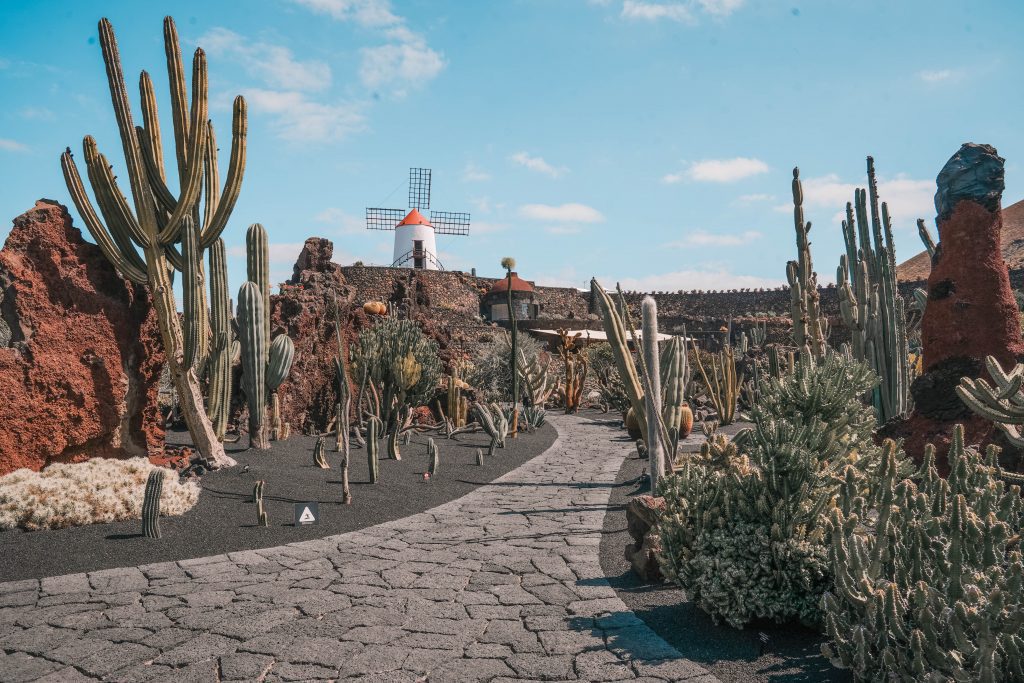
The Cactus Garden, designed by César Manrique, is a masterpiece of landscape architecture.
Located in Guatiza, this garden is home to an impressive collection of cacti from around the world, organized in an environment that combines natural and artistic elements.
The garden’s unique design reflects Manrique’s vision of integrating art and nature.
7. The Jameos del Agua
Location: Haria
Los Jameos del Agua, another masterpiece by César Manrique, is a volcanic cave transformed into a cultural and entertainment center.
The space includes an auditorium, a restaurant and a natural pool.
Visitors can explore the stunning underground environment, enjoy the innovative architecture, and attend cultural events in this unique location.
8. Hermitage of the Snows
Location: Haría
The Ermita de las Nieves, located in the village of Haría, is an important pilgrimage site and an example of Lanzarote’s religious architecture.
The hermitage is dedicated to the Virgen de las Nieves, patron saint of the island, and offers an insight into the local religious traditions and history of the community.
9. Evaristo San Juan Museum
Location: Arrecife
The Evaristo San Juan Museum, located in Arrecife, is a small museum dedicated to local art and culture.
It exhibits a collection of works by Canarian artists, as well as historical artefacts related to the history and daily life of Lanzarote.
10. The Peasant House Museum
Location: St. Barthélemy
The Casa Museo del Campesino, also designed by César Manrique, is a cultural centre that celebrates the life and traditions of the peasants of Lanzarote.
The museum offers exhibits on traditional agriculture, local architecture, and crafts, providing a comprehensive overview of rural life on the island.
Lanzarote is a versatile destination that offers a wide range of excursions to suit all tastes, from outdoor adventures to cultural experiences.
Whether you prefer to explore volcanic landscapes, enjoy water activities, or immerse yourself in the local culture, there is something for everyone on this fascinating island.
Make the most of your visit with these must-see excursions and discover the unique beauty of Lanzarote.


